A moisture-tested coating for below-grade concrete, built for Lakewood basements where the original slab was poured without a vapor barrier underneath.
Basement floor epoxy coating turns a bare, often chalky or damp-feeling basement slab into a sealed, finished floor. The process is similar to a garage floor, grind, repair, prime, coat, but the moisture test at the start matters more here than anywhere else in the house. A basement slab sits against soil, and if moisture is moving up through it, coating over that moisture without addressing it first just traps it, and the coating fails from underneath within a season.
A lot of Lakewood's older housing stock, especially the mid-century ranch and split-level homes built through the 1950s and 60s in neighborhoods like Applewood, was built before a vapor barrier under the slab was standard practice. We test every basement slab for moisture vapor emission before quoting a coating system, not after a customer calls back about bubbling. If the test comes back high, we use a vapor-mitigating primer built for that condition instead of a standard epoxy primer that isn't rated for it.
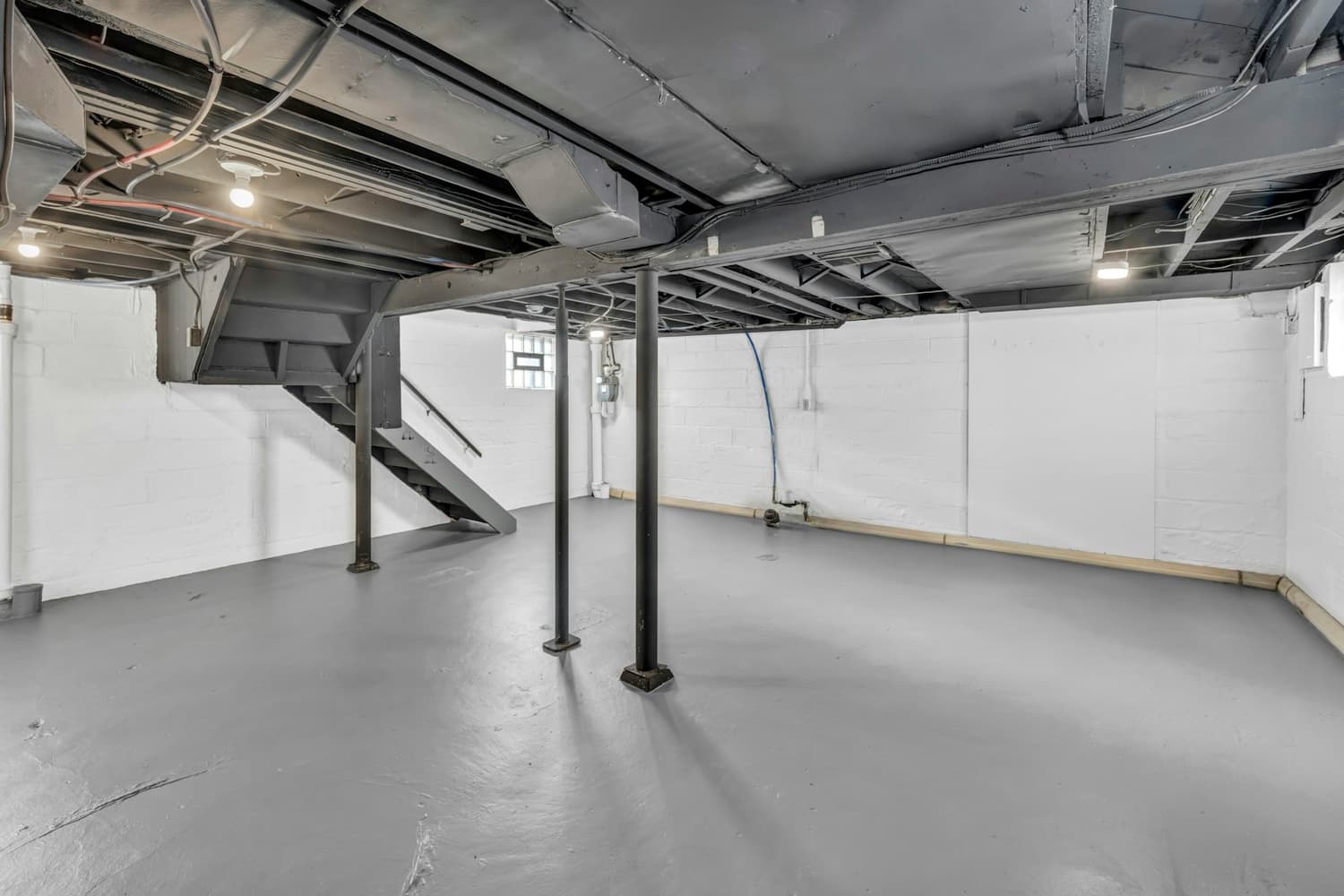
We test the slab for moisture vapor emission before we quote a coating system, this determines which primer the job actually needs.
Square footage, primer type based on your moisture reading, and a flat price in writing before work starts.
The slab is ground to open the surface, then cracks, expansion joints, and any pitting are filled and leveled.
A standard or vapor-mitigating primer depending on your moisture test, then a pigmented epoxy base coat.
A clear protective topcoat, then a walkthrough on cure times and how soon you can move furniture back in.
Basement epoxy coating typically runs $4-8 per square foot installed for a standard system. If your slab tests high for moisture and needs a vapor-mitigating primer, add roughly $1-2 per square foot for that step, it's not optional once a test comes back positive.
Get my flat written quoteA basement slab sits directly against soil on at least one side, sometimes all the way around. If moisture is moving up through the concrete and you coat over it without addressing that, the coating traps the moisture instead of blocking it, and it bubbles, delaminates, or peels, usually within the first year. We test every basement before quoting so we spec the right primer up front.
It can. Vapor barriers under a concrete slab weren't standard practice on most homes built through the mid-20th century, which describes a lot of Lakewood's older housing stock, including much of Applewood. That doesn't mean your slab will test high, but it's exactly why we test rather than assume either way.
Yes, that's normal basement prep. Old adhesive residue and cracks are ground out and repaired as part of the job. We'll flag it during the estimate if we see something that changes the scope significantly.
Yes, clear the floor of furniture, boxes, and anything stored directly on the concrete. We handle everything from grinding through the final topcoat.
Light foot traffic is typically fine within 24 hours. We recommend waiting about a week before moving heavy furniture back into place so the coating is fully cured, not just dry to the touch.
Same business day, Mon-Fri.